Djibouti 🇩🇯
Republic of Djibouti

The flag of Djibouti is composed of two equal horizontal bands of light blue and light green, with a white isosceles triangle superimposed on the hoist side of the field. The triangle has its base on the hoist end, spans about two-fifth the width of the field and bears a red five-pointed star at its center.
Location
Quick Facts
Alpha 2
DJAlpha 3
DJINumber
262TLD
.djCapital
DjiboutiPopulation
988,002Area
23,200 km²Languages
Currencies
Drives on
RightWeek starts
MondayTimezones
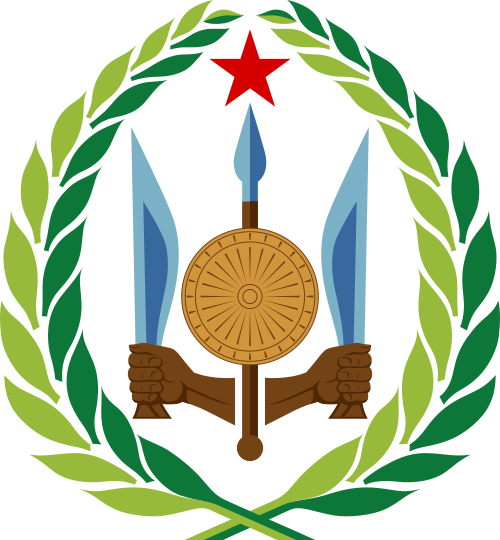
UTC+03:00Coat of Arms
What is the Flag of Djibouti?
The national flag of Djibouti is a tricolor flag with three equal vertical bands of light blue, white, and green. The flag is also referred to as the "L’Unifolié" (meaning "the one-leafed" in French). It was officially adopted on June 27, 1977, after Djibouti gained independence from France on June 27, 1977.
What Does the Djibouti Flag Look Like?
The Djibouti flag consists of three equal vertical bands of light blue, white, and green. The light blue band is located on the hoist side of the flag and represents the sky. The white band, which is located in the center of the flag, symbolizes peace and unity. The green band, which is located on the fly side of the flag, symbolizes the country’s prosperous future.
The flag also features a red triangle that is located on the hoist side of the flag. The triangle is bordered by the light blue band and contains a white star on a white disc. The white star symbolizes hope and the white disc symbolizes the unity of the country. The red triangle symbolizes the blood of the martyrs who fought for the country’s independence.
What is the Djibouti Flag Called?
The Djibouti flag is known as the “L’Unifolié” or the “One-Leafed Flag” in French. The name comes from the white star located in the red triangle on the flag. The star is said to represent a single leaf, which symbolizes the country’s unity.
What Does the Djibouti Flag Represent?
The Djibouti flag represents the country’s independence, peace, and unity. The light blue band, which is located on the hoist side of the flag, symbolizes the sky. The white band, which is located in the center of the flag, symbolizes peace and unity. The green band, which is located on the fly side of the flag, symbolizes the country’s prosperous future. The white star located in the red triangle on the flag symbolizes hope, and the white disc symbolizes the unity of the country. The red triangle symbolizes the blood of the martyrs who fought for the country’s independence.
Who Created the Djiboutian Flag?
The Djibouti flag was designed by the former French Somaliland, which is now known as Djibouti. The flag was adopted on June 27, 1977, when the country became independent of French Somaliland. It features two equal horizontal bands of light blue (top) and green, also known as the Pan-African colors. In the center of the flag is a white star with five points, which represents the five regions of the nation.
The colors of the flag are said to represent the country's natural beauty and its history, with blue representing the sky and sea, and green representing the country's fertile land and vegetation. The star was added to represent the nation's progress and unity. The five points of the star are also said to represent the five parts of the nation, which include the Afar, Issa, Gadabuursi, Somali and Djibouti.
The flag was designed by the French, who ruled the country until 1977. The flag was intended to reflect the country’s aspirations for independence and its desire to be part of the African continent.
The French flag was also used in Djibouti during its rule, and featured a white star in the center. This star was replaced by the five-pointed star when the nation gained its independence.
The Djibouti flag has remained largely unchanged since its adoption in 1977. It has become a symbol of national pride and is used prominently in the country’s national ceremonies and events. The flag is also flown in many other countries around the world, especially in Africa, to show solidarity with the Djiboutian people. It is also used in the United Nations and other international organizations.
The design of the Djibouti flag has been praised for its simplicity and for the symbolism it conveys. The use of the two Pan-African colors is a reminder of the continent’s struggles for independence, while the star in the center symbolizes the nation’s progress and unity. The flag has become an important symbol for the nation and is respected by the people of Djibouti.
The Colours of Djibouti


Similar Flags
Flags that share colours with Djibouti


