Costa Rica 🇨🇷
Republic of Costa Rica

The flag of Costa Rica is composed of five horizontal bands of blue, white, red, white and blue. The central red band is twice the height of the other four bands.
Location
Quick Facts
Alpha 2
CRAlpha 3
CRINumber
188TLD
.crCapital
San JoséPopulation
5,094,114Area
51,100 km²Languages
Currencies
Drives on
RightWeek starts
MondayTimezones
UTC-06:00Coat of Arms
What is the Flag of Costa Rica?
The flag of Costa Rica is a horizontal bicolor of blue, white and red. The flag was adopted on November 27, 1906.
What Does The Costa Rica Flag Look Like?
The flag of Costa Rica is a horizontal triband of blue, white and red. The blue is on the top and bottom, the white is in the center, and the red is on the hoist side. The blue and red stripes are equal in width and each measure one-half of the height of the flag. The central white stripe is twice the width of the other two stripes combined and contains the coat of arms of Costa Rica.
What is the Costa Rica Flag Called?
The flag of Costa Rica is officially known as the “Ensign of the Republic of Costa Rica”.
What Does the Costa Rica Flag Represent?
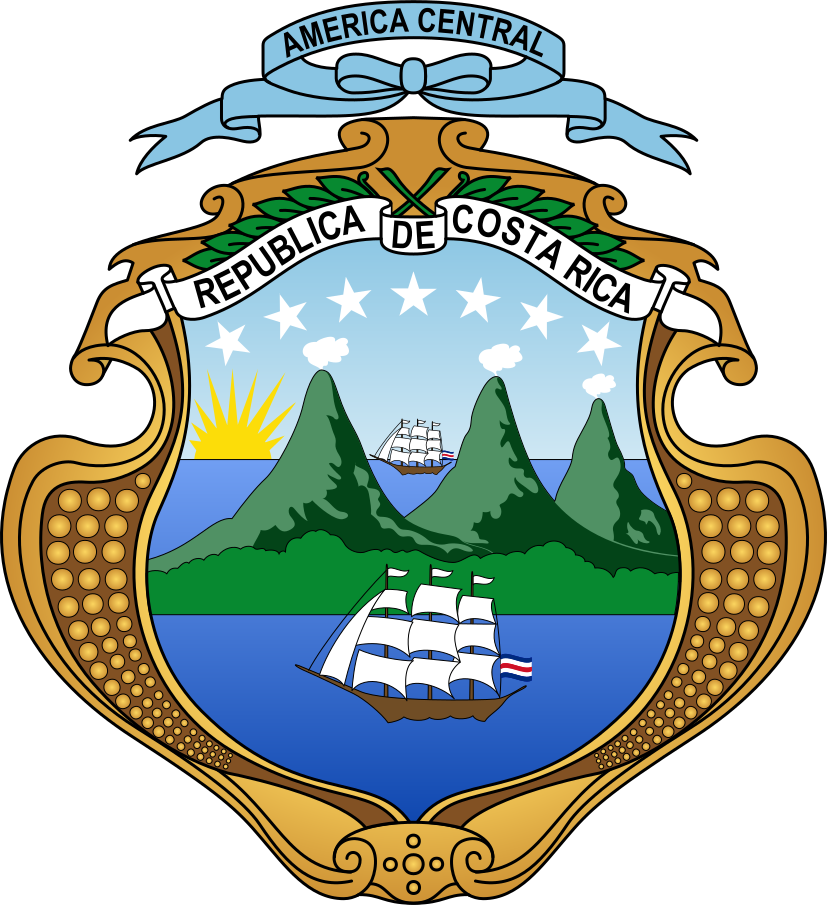
The blue and red stripes on the Costa Rica flag represent the political parties that unified to form the country, the Liberal and Conservative parties. The white stripe in the center symbolizes peace between the two sides. The coat of arms in the center of the flag is the national symbol of Costa Rica and features a triangle with three volcanoes, a yellow sun with seven rays, and a boat in the background. The triangle is meant to symbolize the unity of the country, while the seven rays of the sun represent the seven provinces of Costa Rica. The boat is a symbol of the maritime province of Limón in the Caribbean and the three volcanoes represent the three mountain ranges of the country.
Who Created the Costa Rican Flag?
The current Costa Rican flag was designed by Pacifica Fernández, a Costa Rican schoolteacher, and adopted on September 29, 1848. The flag is composed of five horizontal stripes of equal width in the colors blue, white, red, white and blue. The blue stripes represent the sky, opportunity, and perseverance, the white stripes represent peace and happiness, and the red stripe represents the blood shed by the brave Costa Rican people who fought for their independence.
The Costa Rican flag was the result of a competition that was held in 1848 to decide on a design for the official flag of the country. The competition was sponsored by the then president, Juan Rafael Mora Porras, in an effort to create a symbol of national unity and identity. The winner of the competition was Pacifica Fernández, a schoolteacher from Cartago.
Pacifica Fernández's flag design was based on the flag of the French Revolution and was influenced by the colors of the French tricolor. The flag has five horizontal stripes of equal width, two of which are blue and two of which are white. The red stripe in the center is slightly wider than the other stripes. The blue stripes are also divided into two, the top one being darker than the bottom one. This was done to symbolize the sky and the sea.
The flag was adopted on September 29, 1848, and has been used ever since. It is considered to be a symbol of Costa Rican identity and pride and is flown with great respect and reverence by Costa Ricans. The flag has also gone through some minor changes over the years, with the most significant change being the addition of the coat of arms to the center of the flag in 1906.
The Costa Rican flag is an important symbol of Costa Rican identity and patriotism. It is a reminder of the country's proud history and of the struggles and sacrifices of its people. The flag has also become a symbol of unity and national pride, and it is flown with great respect and reverence.
The Colours of Costa Rica


Similar Flags
Flags that share colours with Costa Rica