Japan 🇯🇵
Japan
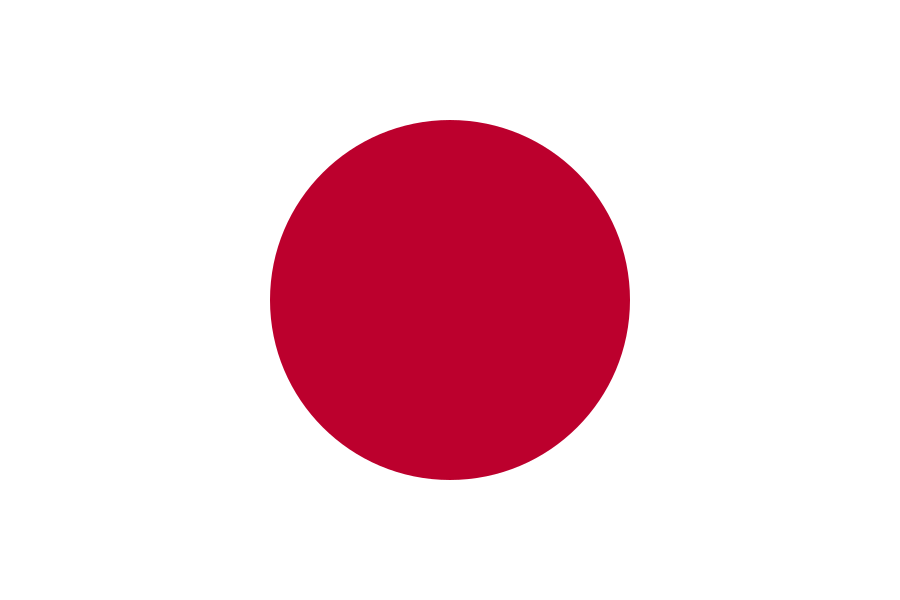
The flag of Japan features a crimson-red circle at the center of a white field.
Location
Quick Facts
Alpha 2
JPAlpha 3
JPNNumber
392TLD
.jpCapital
TokyoPopulation
125,836,021Area
377,930 km²Languages
Currencies
Drives on
LeftWeek starts
MondayTimezones
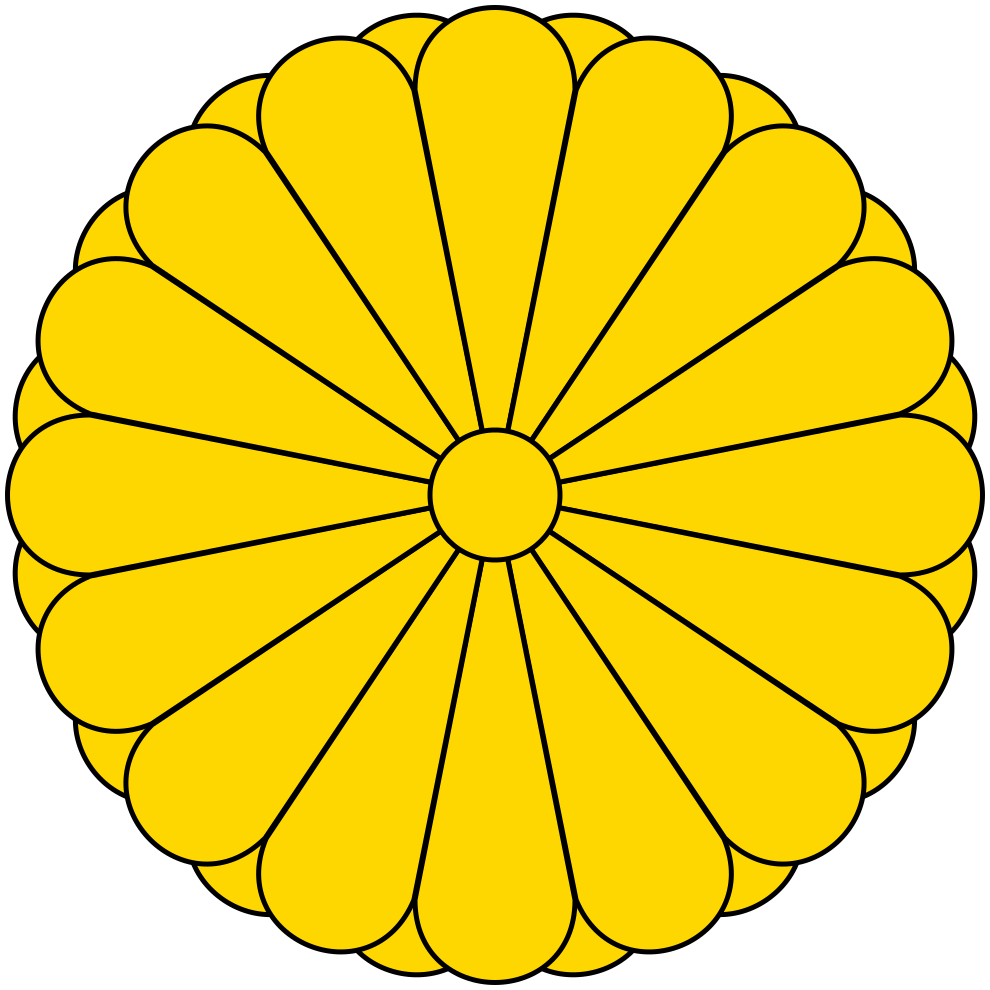
UTC+09:00Coat of Arms
What is the Flag of Japan?
The flag of Japan is a rectangular white banner bearing a red circle, known as the Nisshōki (日章旗; the "Sun-mark Flag"), or more popularly the Hinomaru (日の丸; the "Circle of the Sun"). It is officially adopted as the national flag of Japan in 1999.
What does the Japan Flag Look Like?
The Japanese flag is a white rectangular banner, with a red circle in the middle. The circle is meant to represent the sun. This is also why the flag is sometimes referred to as the Hinomaru, or the "Circle of the Sun". The flag is often flown at government offices, schools, public holidays, and festivals.
What is the Japan Flag Called?
The Japanese flag is officially known as the Nisshōki (日章旗; the "Sun-mark Flag") or more popularly as the Hinomaru (日の丸; the "Circle of the Sun"). The flag is also often referred to simply as the "Japanese flag".
What does the Japan Flag Represent?
The Japanese flag symbolizes national unity, and is a reminder of the country’s history, culture, and traditions. The sun is a strong symbol in Japan, and is seen as a representation of the country’s spirit and strength. The white background of the flag is said to represent honesty and purity, while the red circle symbolizes bravery and courage. The flag is a symbol of Japanese pride, and is a source of hope and inspiration for the people of Japan.
Who Created the Japanese Flag?
The Japan national flag was designed by a famous naval commander and leader of the Imperial Japanese Navy, Admiral Heihachiro Togo. The flag has been in use since the late 1800s and has become a symbol of the country’s long and proud history.
Admiral Togo was born in 1848 in the Togo district of the Shimane prefecture in Japan. He began his military career as a cadet in the Imperial Japanese Navy in 1866. He rose to the rank of admiral in 1893 and was awarded the Order of the Rising Sun, the highest honor of the Japanese Empire. He served in many battles during the Sino-Japanese War of 1894-1895 and the Russo-Japanese War of 1904-1905.
One of Admiral Togo’s most notable accomplishments was the design of the Japanese national flag. He was inspired by the British Union Jack and the French Tricolore. He used a combination of both of these flags to design the Japanese flag. The flag consists of a white rectangular background with a red circle in the center. The red circle is symbolic of the sun and is a representation of the country’s imperial rule. The white background represents the purity and honesty of the Japanese people.
Admiral Togo’s flag design was officially adopted by the Japanese government on February 27, 1870. Since then, the flag has been used to represent Japan in numerous international events. It has been flown in Olympic Games, in the United Nations, and even in outer space.
Admiral Heihachiro Togo’s design of the Japanese national flag has become an internationally recognized symbol of Japan’s proud history and culture. It is a reminder of the country’s commitment to peace, justice, and international cooperation. The flag also serves as a reminder of the sacrifices Admiral Togo and his comrades made to ensure Japan’s safety and security.
Similar Flags
Flags that share colours with Japan