Slovenia 🇸🇮
Republic of Slovenia

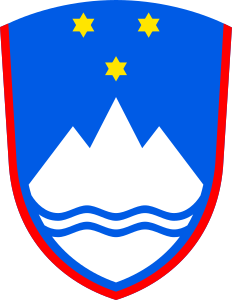
The flag of Slovenia is composed of three equal horizontal bands of white, blue and red. The national coat of arms is situated in the upper hoist side of the field centered on the boundary between the white and blue bands.
Location
Quick Facts
Alpha 2
SIAlpha 3
SVNNumber
705TLD
.siCapital
LjubljanaPopulation
2,100,126Area
20,273 km²Languages
Currencies
Drives on
RightWeek starts
MondayTimezones
UTC+01:00Coat of Arms
What is the Flag of Slovenia?
The flag of Slovenia is a tricolor flag, composed of three equally sized horizontal stripes in white, blue, and red. It was adopted on June 24th, 1991 as a symbol of the Republic of Slovenia's independence from Yugoslavia and is one of the oldest flags in Europe.
What Does the Slovenia Flag Look Like?
The flag of Slovenia is composed of three horizontal stripes of equal width. The top and bottom stripes are white, while the middle stripe is blue. In the center of the flag is a red triangle, which bears a white star in the center. The flag has the same proportions as the flag of Russia and is also similar to the flags of Serbia, Croatia, and the Czech Republic.
What is the Slovenia Flag Called?
The flag of Slovenia is commonly referred to as the “Slovenian Tricolor” or the “Tricolor Slovenian Flag”. It is also sometimes referred to as the “Flag of Freedom”.
What Does the Slovenia Flag Represent?
The three colors of the Slovenia flag represent the three main regions of the country - the white representing Upper Carniola, the blue representing Lower Carniola, and the red representing Slovenes living abroad. The white star in the center of the flag represents the hope and freedom of the Slovenian people. The flag also symbolizes Slovenia's desire for unity and peace.
Who Created the Slovenian Flag?
The Slovenia flag was designed by Dr. Lovro Šuklje in 1991. He was an architect by profession and was part of the Slovenian national liberation council. The Slovenian flag was adopted in 1991, after the country declared independence from the former Yugoslavia.
The original design of the Slovenia flag was a white and blue horizontal bicolor with a Slovenian coat of arms in the center. The coat of arms featured the three-mountain symbol, which was a symbol of the Slovenian nation. The colors of the flag were chosen to represent the three traditional regions of Slovenia: Carniola, Carinthia, and Styria. The three colors were also used to represent the three main religions in Slovenia: Catholicism, Orthodoxy, and Protestantism.
The Slovenian flag was officially adopted by the Slovenian government on the 25th April, 1991. The design of the flag has remained the same since its adoption, with the exception of a new design for the coat of arms. The coat of arms was updated in 2004 to better reflect the cultural and historical importance of Slovenia.
The design of the Slovenia flag is simple and symbolic. The use of the three colors and the coat of arms reflects the pride and unity of the Slovenian people. The flag is often flown during national holidays and other important events to show the solidarity of the Slovenian people.
Dr. Lovro Šuklje was a passionate advocate for the independence of Slovenia and is remembered for his contribution to the design of the Slovenia flag. The Slovenian flag is a symbol of the nation’s pride and unity and is a source of inspiration for many Slovenians.


Similar Flags
Flags that share colours with Slovenia